I’ll never forget the first time I saw that guy. Not the face, no – the face is gone, don’t have the faintest clue what it was, well, maybe it had feathers on it – but I remember him. Came downstairs all chained up, brought along by three of the biggest bastards we had, weapons out, all eyes on him. And he’s not moving a finger, not sweating a drop, but damnit if he isn’t grinning like a pumpkin patch come Halloween.
“What’ve we got this time?” I said.
The biggest and ugliest of the guards pulled out the papers and held them between finger and thumb on his second try. “Theft.”
Well, that was new to me – though of course, everything was new to me back then. I didn’t think we’d had theft yet. Universe isn’t but brand new and someone ups and walks away with part of it. “What’d he nab?”
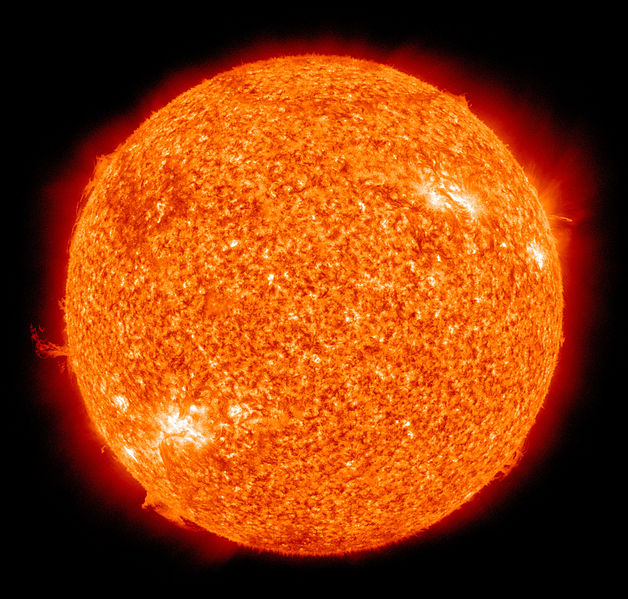
The thumb moved with painful care and delicately flipped loose a second sheet of paper. “The sun.”
“What?”
“Stole the sun. You know that old guy that lives down there with his daughter?”
“Yeah.”
“Snuck in with a fancy disguise and a made-up-name and snatched it right outta his longhouse. Moron held it in his mouth, half-burnt out his voice. Now’s all he can do is croak.”
“Sentencing?”
A third flip, done in haste, tore the paper clean in half. “Shit, shit, shit.” The fingers closed in agitation and mangled the remnants. “Just spread the burn – toast ‘im crispy-black.”
“Right,” I said. So we took that sun and burned the thief crispy-black, but we couldn’t undo that crime of his, because down there in the world, that sun was still shining. And we couldn’t take that grin off the thief’s face either.
Now, things got real quiet for a while, as they should. Crime doesn’t pay, punishment prevents recurrence, so on. I didn’t mind all that much; it let me catch up on my paperwork. Well, it let me push my paperwork around on my desk so the piles looked smaller. Same thing. If you actually do any of your paperwork, I’m pretty sure that violates some little universal law somewhere and causes problems. Read it somewhere at the time, I think.
Well, my reading got interrupted sooner than I hoped, because the stairs started thumping with big jackboots again and down comes six of the biggest, meanest bastards we had, weapons out, chains attached to them and the prison, and the grin on that face – whatever that face was, it was on the tip of my tongue – just brought back memories. Although it might have been furrier than I recalled.
“Him again? What happened this time?”
The biggest guard dropped the shredded remains of what had once been some papers on my desk, vibrating with anger.
“Death.”
“What?”
“Death forever. Little shithead gave us death with no way back. Some of his pals were cooking up a way to put a stop to the whole sordid business, bring back the ghost of their pal and stick it back in the body. Well, this jackass”-a savage kick was directed at the jackass, who dodged it, grinning -“figured that the world without death would get ‘too crowded,” and he locks the door at just the wrong moment and bam, spirit goes back home to the underworld and tells everyone else not to bother. Death’s forever, no takebacks. Sentence is death, before you ask, and good bloody riddance to him.”
“Poetic justice,” I said, and signed it all through. Figured that’d be the last I saw of him, that one. Harsh to put an end to him for good, but making sure everything dies forever’s a lot worse than break-and-enter grand theft. Can’t be soft on murder-enablers, or else the whole system stops working.
Now, the next time caught me by surprise a bit. Clang thud bang, staircase almost rattles and falls apart under the weight of twelve guards, a thousand chains, and the biggest smirking smile I’ve ever seen, so big it seemed like it’d almost make his toga burst.
“Sign,” said the guard. He was smaller than the last few I’d spoken too, but too angry to speak. I had to read the papers myself, a damned nuisance.
“Let’s see….he uh, rigged a meal?” I asked.
“Read. It.”
I read it. “He rigged a meal against the king of the gods, feeding him fatty bones and tricking him into giving the humans the steaks?”
A short nod. “Page. Two.”
I scanned it. Okay, that’s criminal mischief at worst, but seems mostly a private dispute, but…
I read the next page. Then read it again. Then I rubbed my eyes a lot. “So to make it fair and even the gods take fire from the humans, then HE steals it back?”
A nod.
“What’d he use?”
The guard flung down a stalk of fennel, the inside seared crispy-brown.
“Great. Another break-and-enter, and sacrilege in the second degree, plus knowing contempt of omnipotence.” I shook my head. “You’d think he’d have learned after the first time. What’re we going to do about this guy? We already killed him once.”
“Page. Three.”
I looked at page three. “Jesus. Isn’t that a bit…no I suppose it isn’t.” I looked at page three again. “Still…an eagle, right?”
“Yes.”
“And the liver?”
“Yes.”
“Every day forever and ever?”
The guard’s lips had compressed themselves into a tiny, utterly bloodless smile. “Yes.”
“Well, this ought to teach him a lesson if nothing else will.” I signed it. “Go on.”
I watched him walk away, wrapped in chains. He was still smiling, all the way down the hall.
There was a quiet bit there, for a while, when everything was routine. A little damnation, a little repentance, a few curses and some imprisonments. And then one day I hear this metal scream and the staircase bursts in half, spilling twenty-five guards and the head warden down the stairs cursing in a heap, with that smile on top of a face on top of the whole pile. It seemed more crooked than I remembered, and a few new scars were on it.
“Well?” I asked.
The warden struggled to his feet, put on his left shoe again, and spat out someone’s moustache. “Well what?”
“Well what now? I thought we’d locked him up for good. What’s going on?”
The warden’s eyes narrowed. “What’s going on is that the little weasel got clean away at least a thousand years ago. Under your watch.”
“But-“
“What’s going on,” said the warden, talking just a little more loudly, “is that before we found him again, he’d stolen fire at least three more times on damn well every continent. Gave it to humans each time, too, damned if I know why.”
“Well-“
“WHAT IS GOING ON,” yelled the warden directly into my face, “is that at SOME point he got a bit bored of all of this and stabbed the bright god to death with a piece of cursed mistletoe, THEREBY dooming the whole lot of them to apocalyptic battle and defeat and forcing the rebirth of the world.” He slammed a single sheet of paper on top of my desk one handed with violent force, then smiled pleasantly. “Sign here.”
I signed the form, which condemned the individual concerned to be chained up by the guts of his children in an underground chamber and have a poisonous serpent drip excruciating venom directly into his eyes. “Signed.”
“Good.” The warden tipped his hat, the guards went on their way, and I swear I saw that smile break into a snicker before its bearer passed on his way.
That was a thousand years and more ago, and it’s been quiet since. But I know too much to stay calm now, because how often does anyone go down there and take a look in that cave? Oh, they still hear the earthquakes now and then, but who checks, and how often?
It’s just a matter of time. Some people just never damned learn.
-
You are currently browsing the jamieproctor.ca blog archives.
Pages
Archives
- March 2026
- February 2026
- January 2026
- December 2025
- November 2025
- October 2025
- September 2025
- August 2025
- July 2025
- June 2025
- May 2025
- April 2025
- March 2025
- February 2025
- January 2025
- December 2024
- November 2024
- October 2024
- September 2024
- August 2024
- July 2024
- June 2024
- May 2024
- April 2024
- March 2024
- February 2024
- January 2024
- December 2023
- November 2023
- October 2023
- September 2023
- August 2023
- July 2023
- June 2023
- May 2023
- April 2023
- March 2023
- February 2023
- January 2023
- December 2022
- November 2022
- October 2022
- September 2022
- August 2022
- July 2022
- June 2022
- May 2022
- April 2022
- March 2022
- February 2022
- January 2022
- December 2021
- November 2021
- October 2021
- September 2021
- August 2021
- July 2021
- June 2021
- May 2021
- April 2021
- March 2021
- February 2021
- January 2021
- December 2020
- November 2020
- October 2020
- September 2020
- August 2020
- July 2020
- June 2020
- May 2020
- April 2020
- March 2020
- February 2020
- January 2020
- December 2019
- November 2019
- October 2019
- September 2019
- August 2019
- July 2019
- June 2019
- May 2019
- April 2019
- March 2019
- February 2019
- January 2019
- December 2018
- November 2018
- October 2018
- September 2018
- August 2018
- July 2018
- June 2018
- May 2018
- April 2018
- March 2018
- February 2018
- January 2018
- December 2017
- November 2017
- October 2017
- September 2017
- August 2017
- July 2017
- June 2017
- May 2017
- April 2017
- March 2017
- February 2017
- January 2017
- December 2016
- November 2016
- October 2016
- September 2016
- August 2016
- July 2016
- June 2016
- May 2016
- April 2016
- March 2016
- February 2016
- January 2016
- December 2015
- November 2015
- October 2015
- September 2015
- August 2015
- July 2015
- June 2015
- May 2015
- April 2015
- March 2015
- February 2015
- January 2015
- December 2014
- November 2014
- October 2014
- September 2014
- August 2014
- July 2014
- June 2014
- May 2014
- April 2014
- March 2014
- February 2014
- January 2014
- December 2013
- November 2013
- October 2013
- September 2013
- August 2013
- July 2013
- June 2013
- May 2013
- April 2013
- March 2013
- February 2013
- January 2013
- December 2012
- November 2012
- October 2012
- September 2012
- August 2012
- July 2012
- June 2012
- May 2012
- April 2012
- March 2012
- February 2012
- January 2012
- December 2011
- November 2011
- October 2011
- September 2011
- August 2011
- July 2011
- June 2011
- May 2011
- April 2011
- March 2011
- February 2011
- January 2011
- December 2010
- November 2010
- October 2010
- September 2010
- August 2010
- July 2010
- June 2010
- May 2010
- April 2010
- March 2010
- February 2010
- January 2010
- November 2009
- October 2009
- September 2009
- August 2009
- July 2009
- June 2009
- May 2009
- April 2009
- March 2009
- February 2009
Categories
- Random Rambling (58)
- Short Stories (820)
- Stories from Somewhere (15)
- The Life of Small-Five (17)
- Uncategorized (4)
Login
Storytime: Repeat Offender.
May 23rd, 2012Posted in Short Stories | No Comments »
Storytime: The Bystander
May 16th, 2012The world was cool, a dark shell of rock, a cliff overhead, a shelter from the scalding gravel masquerading as sand. It faded into reality in a billion pieces, one after another, faster than anything, slower than footsteps, which were the first sounds that he heard when he woke up.
He doesn’t have a name. He doesn’t know what a name is, and never will, because his brain is small and blunt and doesn’t need to be particularly powerful to keep him alive. As far as he can comprehend himself, he is big. A unrelated but currently important fact: big is also old, and a heavy sleeper because of it, which is why he just let what smelt like…. four meals walk right by his sleeping nook. Their feet couldn’t have landed more than a whisper from the blackish grey scales of his snout.
This has annoyed big. His personal space has been infringed on and he’s missed an easy (and welcome) meal. Well, he’d better get going. He’s not going to fall back asleep anytime soon, and the food’s walking away down the tunnel. Big doesn’t usually go down there, because it’s so very cold, much more than the calm shade of the nook at its mouth, which is juuust right to keep him from cooking during the height of the day, when the sun’s burning a hole through anything that steps into its sights out there on the black hot rocks.
If big could understand the sounds the food was making farther down the tunnel, he’d know they agreed with him. But he can’t, so all he hears is noise, noise, noise. Worse than monkeys and birds rolled together.
“Shit, I think I’ve burnt me goddamned toes off.” A sound made for wheedling; not high-pitched, but mostly emitted through the nose.
“Shut your griping.” A phlegm-thickened, short-set voice that brings to mind rotten oatmeal, grit-covered clothes, and bloody knuckles.
“Come off it, ye were bitching at the oars so hard I’d thought they’d break off.”
“Jack was rowing.” Soft and deep, with a little edge that suggests it’s almost running through its stock of patience. “Harping about how much you burned your foot is the most work you’ve done since you stepped off the boat. Now which way?”
Fluttering, scraping noises, as of something unfolding.
“Here.”
“Good. Keep it to that volume, eh?”
Big shook himself once – lazily – and set off after the sounds, slow and deliberate, one foot at a time, a back-and-forth bent-kneed swagger that dragged along all of his hundreds of pounds with all the ponderous pomp they deserved. He came to a fork in the tunnel, flicked his tongue, tasting, and set off down the correct route. More noises filtered their way into his head.
“Much further?” said Jack.
“Not much,” said the noise that was Isaac. “Just a wee bit. No more turns from here.”
“Oh, no more turns, is it?” said a peevish, ragged thing that sounded like it was being throttled through a ruptured chimney.
“Good thing we’ve got you along with us to guide us all those treacherous ways. We could’ve got lost on our way to the cave that we could see clear from the boat. Or we could’ve taken the wrong turn out of two paths. Or we-“
“Will ye shut the hell up, Matthew? If it weren’t for me and me map ye’d be sitting in an alley somewhere waiting for a bloke with wallet, whisky, and no brain in his skull to mug himself next to ye. Instead, ye’re less’n a few hundred feet from the biggest pile of gold ye’ve ever dreamed, a pocketful with your name on it? That’s enough to buy a damned pub and drink yerself to death before yer next birthday, and bitching yerself silly about it.”
“And if it weren’t for us,” said Jack, “you’d be still sitting on a pier waiting for passage to this burned rock.”
“Just shut off, will ye – ALL of ye! Look, we can all argue after ye’ve got your fifth-”
The footsteps stopped, as did big’s, in perfect synch, one claw frozen just before hitting the ground.
“Fifth?” said that deep voice. “Now then Isaac, that’s not how I count us. By my eye, I see three men. And yourself.”
“Five pocketfuls, and that’s just the right size. Ye get a fifth, Jack gets a fifth, Matthew gets a fifth, I get a fifth, me map gets a fifth. Without it, there’s no money at all. And I’ll be having to carry it, on account of me having two pockets.”
“Really? With it ‘a few hundred feet’ away?”
“Look, if ye-“
“Quit baiting the little bastard, Benson. Open ‘im up.”
“Quiet.”
There was a gasp, a shuffle, and a shriek that ended in a few sharp sounds. Big’s tongue flicked, and came back with the smell of blood.
“Four ways, then. Come on.”
“Right.”
“Took your time, didn’t you? Should’ve slit him a new throat last week after he wouldn’t shut up about the storm.”
“The rest of the crew wouldn’t be as understanding as you two. Now quiet.”
The muttering trailed off and the footsteps started again. Big’s long-suffering claw touched ground, and his pace quickened towards the blood. Maybe the food would come easy this time.
“Understanding of what, exactly? A bit of murder? Because if they were going to look funny at the story of ‘oh gosh he fell overboard in the storm, you saw how he was staggering about’ I don’t think they’re going to be fond of ‘there was a cave-in that killed exactly one person.’”
“We’ll blame it on the lizards. You saw them. He tripped on one.”
Big nearly tripped on the corpse. It was scrawny and insubstantial, more bone than body, and altogether puny, not nearly the right size. He’d have been more pleased to eat a seagull. A small hiss escaped him, and his steps quickened, the faint whisper of his tail on the stones growing to a murmur.
“Oh yes. The lizards. Of course. How big were they again, five foot?”
“Quiet.”
“You keep saying that-”
“And I mean it.”
“Yeah.”
Nothing much then. Running water flickered across big’s ears, glided on his tongue.
“Oh bloody wonderful. An underground stream? Really?”
“Crossable.” A large splash followed the proclamation.
“Doesn’t mean we have to enjoy it.”
Splash. Splash.
“Freezing!”
“You’ll feel warmer with gold in your pockets.” Footsteps sounded on stone again.
“Not warm enough.”
“You are determined to make a nuisance of yourself, Matthew.”
“Well aren’t we feeling menacing today, Benson.”
“It is a statement of fact. Here is another: there is a great deal of gold just past us, and if you persist in your petty complaints, myself and Jack will be splitting it into two pockets instead of three.”
“Facts, facts, facts. Jack, give Benson his facts.”
Benson froze again for an instant as the footsteps ceased, then resumed under the cover of the quick scuffle that emerged, punctuated by two hoarse shouts and a wheezing screaming that turned liquid, ending in a much, much larger splash than heard previously.
“Shit.”
“Good job. He was right about two pocketfuls being better than three, just came to the idea later than we did.”
“Shit. Shit.”
“Oh, he didn’t get you that badly.”
“Got my leg. My good leg.”
“Right, right. Look, just tie it off and we can fix it back on the boat. I bet that cave-in line would work now, you know. Two casualties work better than just one.”
“Hurts. Give me a hand…”
“Later, first-“
“NOW, bastard!” A sigh. “Fine, fine. Hold still.” Scruffle. Bang. Bang. SPLASH.
And then quiet, with nothing but a rush of footsteps.
The creek pulled itself within range of big’s shoddy night vision, a creek run lost inside the island’s guts, winding its way down nowhere good. Blood was in the air, on the rocks, and lost to the water – along with both the corpses he could scent, prompting another irritable hiss, larger and louder. He lunged across the fast-flowing current with angry haste, claws touching the far side before the tip of his tail was wetted, and moved down the hall at a fast crawl, the scent of blood and food held firm in his tongue-tip’s grasp.
Light ahead, and a strange gibbering, a laughter, a sound that big didn’t understand and didn’t care about. Big broke into a gallop, all of him dragging behind his legs, a deadweight on a set of furious pistons fronted with serrated teeth.
There was a bright light and a loud noise ahead. There was a chamber, as big entered it. And in its center, a single massive, glittering, golden thing that a species more attracted to bright colours than big’s might have found wonderful. He had no eyes for the statue; his treasure stood before it and was dwarfed against it, meat and flesh, arms outstretched, one hand shining with mechanical sunshine, head tipped back and laughing, laughing, laughing.
“All in one piece and all the wrong size… too big for any one man’s pocket!” said Matthew, as he turned around, face locked into a grin that was all teeth and no mind. “Too big! It’s too big!”
And he was just the right size.
Posted in Short Stories | No Comments »
Storytime: Avoidable.
May 9th, 2012It was on a Tuesday that it showed up – no, wait, that’s not right. It was a Wednesday, and a typical Wednesday too: dead in the water, limp-legged, slouch-backed, and tepid. That was when that big old meteor went and turned itself into a meteorite, cratered right hard right in the middle of the country where the wind blows straight and the horizon’s all around you. Left a pretty big hole, too, but after a few reporters took a couple of pictures and some men in the battered, lackaday clothes of serious science took some samples of soil and rock, that was it for interest. It was just a rock in the end, even if it’d come a million trillion miles to land on our planet and make a hole in it.
Now what grew down in that hole, that was the big business, even if it started as small business. Just a little tuft of white stuff at first. Cream-coloured, if you’d like to be specific, but it was so small it was hard to tell. Real small. Josh Macintyre saw it sprouting there, and some little bit of the back of his brain made him swerve his tractor an inch or three to the right and change the course of history.
So history happened. That little white tuft bloomed and blossomed and ballooned and it got bigger and bigger. It sucked up all the fertilizers on the plants near it, and then the plants, and then the field. It was halfway through sucking up Josh Macintyre’s barn when he called the police down.
“Interesting,” they said. And then they set fire to it.
It sucked up the fire, and then it finished sucking up the barn.
“Try the national guard,” the police said.
The national guard came down, and it brought some more badly-clothed people of science. They scraped and chipped and analyzed, and they said something or other but by then the issue was being voted on by some very important old people and they had no time for pencil-pushing slide-ruling egg-headed science-types. So they voted that the army shoot it until something happened.
The army showed up in some really big machines, pulled out some much smaller but even more dangerous machines and all their little lead snacks, and then they shot it. It sucked up the bullets, expanded out to the highway, and started chewing its way off in all directions, following the asphalt and worrying it like a dog on a bone.
“Maybe we should,” said one of the science people, and he was told to put on his lab coat and go away because we’re BUSY here professor. The thing, whatever it was, was voted on three more times, and after two splits on partisan lines it was agreed that it would be bombed until it was reduced to many small pieces not exceeding three centimeters in diameter. These would be pureed and charred and used to flavour a very lucrative new kind of ice cream sandwich.
It was bombed, duly, and expanded fifty-five times overnight, by which point it was crowding into every major city on the continent. The highways were overgrown lumps of fluffy, puffy white matter, a cross between a marshmallow and a mushroom.
“This is obviously some sort of conspiracy against us,” agreed some of the very important old people, and they voted a bipartisan consensus to find out whose fault it was. For a while it was argued that it could be because of those young people, but it certainly wasn’t any of THEIR grandchildren, THEIR grandchildren knew how to behave properly and respectfully, so it was probably some other country.
The other countries said this probably wasn’t the case, and maybe this was some trick they were trying to pull here, unless they were just mistaken and being silly gooses.
“Up yours,” voted the very important old people.
Take a long walk off a short pier, suggested half of the other countries. No, they make sense, argued the other half.
You and whose armies?
Ours.
Well, OURS!
Ours can beat up yours.
By this point some of the puffy white stuff had punctured its way to the other side of the ocean, running along old undersea cables and such, and everybody was getting fed up with it.
“Obviously,” advised the very important old people of the first country, who were experts at this by now, “the solution is to bomb it harder.”
Right, agreed the rest of the world. And an awful lot of bombing happened, and an awful lot more of the white stuff spread everywhere. It crawled up skyscrapers, it ate up roads, it turned houses into puffy, plumpy caves. It clogged gun barrels, smothered missile stockpiles, and sunk bunkers into big squishy pits.
This was obviously some sort of plot against someone by someone else, so the countries all did the sensible thing and accused each other of harbouring a nasty plot again, especially the ones who’d asked whose armies, because the answer was quite obviously their armies and nobody likes a smartass. So the countries all took a break from bombing the white stuff, which was an unrewarding chore at best anyways, and started bombing each other, which was a lot more satisfying, fun, and traditional. Besides, nothing they tried slowed the damned thing down. It ate the spent munitions, and the exploded bomb shells, and the ruined husks of buildings, and everything worthwhile. And the more they fought the more there was for it to eat. It was getting tiresome in the extreme.
What we need, all the countries decided, separately, independently, and privately, is a bigger bomb.
Luckily, quite a few of the countries had really big bombs, so they broke them all out all over the place, hoping to get rid of the white stuff or maybe at the very least do in its food supply. And that was how most of them vanished overnight in a series of startlingly huge explosions that filled the atmosphere and soil with a lot of really nasty stuff. Luckily, it turned out the white stuff liked to eat it, so the world was only partially unlivable for about a decade.
When that about a decade was over, the white stuff covered a nice big chunk of the planet’s land area, but wasn’t growing too much anymore. No more food for it to expand with, and it was actually shrinking back a bit on the edges. Too much too fast, overreached itself a mite. And down the road came a few people to see what was making it fade away, falling back, to look at all those thousands of miles and millions of tons of matter just shrinking away into nothing.
And just as they were packing up to walk back home, the youngest person there asked the white stuff, “now why’d you do all of that?”
And the white stuff said (in a very small but clear voice, all fibres and filaments): “No-one ever asked me to stop.”
Posted in Short Stories | No Comments »
Storytime: The Samaritan.
May 2nd, 2012Maude was bored.
This was entirely normal, especially in deep space, especially especially if you were a penniless matter-panner sitting besides a black hole so old and worn it didn’t suck so much as slop, waiting for weeks and weeks on end for something worth taking home to drift through the sieve-and-pan of your un-reality net. Maybe some uranium, maybe some platinum, maybe diamonds, maybe a big ol’ chunk of iron the size of a city-state.
Maude had been here for three months. So far, she’d found a fragment of ice the size of her torso. She’d watched all her old sensetanks three times over and her new ones six, she was starting to run out of meals-u-eats that had organic matter in them, and although she’d brought no mirror on board, she had a strong suspicion her chin was starting to boast more hairs than Harold’s.
So Maude was bored. Very bored indeed. This was why it was such a large surprise when her grungy old un-reality tethers snagged something that that she wasn’t surprised at all. She looked at the instruments: anti-matter, ten thousand tonnes, blah blah blah, and was fully nine-tenths of the way through the procedure to lock the catch into place before exactly what she’d just done sunk in.
“Huh,” said Maude. She did the math. Assuming the demand in the market had – oh, let’s say been cut in half, then half again – she was now richer than all of the last ten governor-generals of her system.
Maude considered this. She could afford to pay off her and Harold’s mortgage. She could afford to pay off her grandchildren’s mortgages. She could afford to buy her planet and most of its neighbours and maybe a luxury palace on Earth for retirement, which she could afford to do right now.
“Well,” said Maude, because that’s all she could think of, and she locked the anti-matter into place, set coordinates for the long chug-a-chug homewards, and did a little hooting, yelping, skipping dance in the middle of the floor. She bruised her elbow on a cupboard and didn’t care in the slightest, and she stuck her head into the longest and most tedious of her sensetanks (Pride and Prejudice and Pirates and Penguins and Prosecutors in Paris, IIV) and paid not the slightest attention to anything that was happening.
This elated state of non-boredom lasted for approximately three days, which was when Maude was stirred from her newfound hobby of calculating the highest rank of politician she could bribe (three presidents at once and the vice-president, plus their lawyers) by the peevish beeping of her proximity alarms.
“Meteor belt,” she decided. Then she looked at the display, and changed her mind because meteors didn’t have that many spikes, or mass launchers.
“Hello, tiny scrap-panning vessel,” hailed the nearest and largest not-a-meteor. “This is High General and Executive Gunner Killowac Murgatroyd of the Scram III.”
“Hello,” said Maude. “Maude Hanover, on the Sally. Whatcha want?”
“Not want, sad to say,” said the heavily armed person on the enormous dreadnought, “but need. A trifling engagement with a patrol destroyer seems to have put a dent in my flagship’s fuel tanks, and I’m afraid my invasion of the sector here could be postponed. You wouldn’t, by chance, have five thousand tonnes of anti-matter to spare, would you?”
Maude considered this, along with the mass launchers, along with the matter disruptors, along with the hyperspace laser batteries.
“Sure,” she said.
“Wonderful,” said the galactic warlord. “A pleasure doing business with you. Goodbye.” And with that, he and his fleet of war machines seized half her anti-matter and dove briskly into hyperspace at ten times the speed she could ever hope for.
“Drat,” said Maude, compressing several times the normal swear-weight of emotion into it. And she went on her way, cussing once every hour like clockwork, doing some revised math. It wasn’t so bad, anyways. She could still afford to bribe the president to go on a manhunt for High General and Executive Gunner Murgatroyd and have enough left over for a nice comfortable planet for her and Harold to retire on. They could bring the rest of the family too, especially if it had some nice beaches. Kids love beaches.
A little more than a week later, she was jolted out of her latest sensetank rehash (The Sun Goes Round the Moon, starring Platt Manderson – she could probably hire him as a masseuse, but Harold would be put out) by the high-pitched wailing on the communicator of a man with nothing left to lose. Sure, the man was a Treeblik, and they don’t have genders, but it was close enough.
“What’s wrong?” she asked.
“I am ruined!” lamented the Treeblik. “Here I am, an honest merchantman-” he caught himself, feeling the touch of skepticism (the only known force in the universe to exceed hyperspace in velocity) “-a reasonably forthright merchantman of limite – adequate means, caught up in ruin and bankruptcy by the plundering and voracious greed of one Killowac Murgatroyd!”
Maude winced a little at this.
“I am plundered and my hold emptied, my years-long pilgrimage of goods-gathering for naught. My assets will be seized, my name disgraced, my company stricken from the registers, and my wife won’t give me hugs anymore.”
Maude drummed her fingers on her armrest and started doing math again. “How much was your cargo worth?”
“A million billion,” said the Treeblik. “Not a penny less!”
“How about I give you five hundred tonnes of anti-matter?” asked Maude.
The Treeblik performed an elaborate and ancestrally practiced double-take, which took up twenty seconds and two-thirds of his bridge. “Please,” he managed at last, in a strangled voice that suggested most of his vocal chords were absent.
“Done deal,” said Maude. She transferred it over and got out before the Treeblik could start to sing one of his maternal victory cadenzas. “Not so bad,” she said to herself. “Not so bad.” She’d just have to rent out a continent or two to make ends meet, and maybe bribe the vice-president instead. “Not so bad.” Then she decided she’d done enough math, and plunged her head into the sensetank for The Joy of Art History, coming up for air only two weeks later, when she almost ran straight into the leading ship of a million-strong fleet.
“What’s going on?” asked Maude.
“Refugees seeking refuge,” said the leader, a dour and muscular Murmosap with forearms that could consume sharks in three bite-and-shakes of their jaws. “A manic moron calling himself the High General and Executive Gunner shot out of hyperspace, ordered everyone off-planet, blasted it open down to the core, took all the mineral resources, and shot off again.”
“Mmpph,” said Maude, trying appear sympathetic while wincing so hard her jaw hurt.
“And to top it all off, we’re in whatever we could grab and fly,” said the Murmosap, the pessimism seeping in through his eyeballs more throughly still, “so half of us are having to push the other half around by now on account of idiots driving no-account pleasure craft with the fuel efficiency of a paralyzed jetliner. And we’re all running low again. Doom rides abroad and the end is nigh.”
“How nigh?” asked Maude.
“About a week. I did the math.”
Maude did more math herself. She was beginning to dislike it. “How many of your ships can take antimatter?”
“A lot, probably. We’ve got enough mechanics to jury-rig something in the bigger boats anyways.”
“Would a sliver each help matters?”
A sliver each in a million ships came up to a thousand or so tonnes, but by the time the refugee fleet was fading in Maude’s sensor range, it was already accelerating again. And it was okay. She could still rent out a continent on a nice, sensible, stable planet, bribe the governor general to lay it easy on the taxes, eat out at ridiculously fancy restaurants once every month, put the kids through nice stable schools. It’d be fine. It’d be fine.
“Hello?” asked a high-pitched voice over her communicator. “Help?”
“Problems?” asked Maude.
“Baby problems,” said the voice.
“Ah, been there,” said Maude.
“Oh good. I was hoping I’d get someone who understood. Tell me, can you spare a few thousand tonnes of anti-matter?”
Maude blinked. “Baby problems?”
“Yes, she’s starting to teeth in there, and if I don’t feed her soon, she’ll eat her way out through my left ventricle. I wouldn’t mind so much if it wouldn’t kill her too – she’s not ready for raw cosmic radiation yet, poor dear. Needs another few years.”
“Oh,” said Maude. “Sure. Take it.”
“You’re a kindly dear,” said the high-pitched voice. Something composed of what Maude’s sensors refused to consider as matter stirred centimetres off her port bow, and there it went, two and a half thousand tonnes of anti-matter, chewed away in a flash. “I wouldn’t impose like this, but some wicked man took a shot at me while I was feeding, and I had to flee all the way out here away from proper dining locations, and you’re the first person to come by with a proper meal.”
“It’s all good,” said Maude. She could probably bribe the planetary senator now. It was likely. Not that she’d need to; she could afford the taxes on a city-home without a blink for the next couple generations.
“Oh you modest little thing. Thank you so much; I’ll drop by when she’s due and let you meet her. Take care now!”
Maude cruised in idle for the next month, taking in everything, letting the sensetanks lie, keeping her mind lazy. And there went the sensors again. Bip. Bip. Bip. Something sitting still in space, idling there as she mosied closer. It was a few miles long and a few miles wide and most of it was built around and outside a big complicated prong that looked a lot like a cannon. Huge and beautiful (now half-obliterated) murals on its side marked it as a Steed-ship of the Non-Holy Siblingdom of Secularism, operated by a single knight.
It wasn’t moving, and large chunks of it were missing.
Maude sighed. “Good Samaritan,” she said, in a very uncomplimentary way, and then she punched the communicator until it worked.
“Greetings,” said the ship’s occupant. She was a spectacularly large and fit Heronius Zach, at least sixteen inches tall, possessed of a prize-fighter’s physique and sensitive, soulful ears that stared firmly at Maude with a perfect openness that would’ve obliterated a politician’s soul.
“Hey,” said Maude. “Problems?”
“A little,” admitted the Heronius Zach. “I am Knight-Questor Iz. Is the madman known as Killowac Murgatroyd still afoot?”
“Probably,” admitted Maude. “He’s pretty mobile. Which is my fault.”
“I’m sorry?” said Iz.
“It’s a – well, not a long story. Listen,” and Maude told her.
“You didn’t have much of a choice,” said Iz. “What is done is done, and would’ve been done whether you allowed it or not. ‘Where there is no choice, there is neither shame nor pride.’ That is a quote and also a fact.”
“Mmm,” said Maude.
“Don’t mmm me, please. Ambiguous denials are purposeless and cause premature mental fatigue. Now, which way would you say Murgatroyd was traveling? My drives are online again.”
Maude told her.
“Straight towards the system capital,” said Iz, and gave a little wiff that was the sigh of the Heronius Zach. “Of course. Plunder the most there. I can catch him before he makes it, I expect.”
“That going to be enough gun to stop him?” asked Maude.
“Ordinarily?” said Iz. “Yes. He punched a hole through my magazine, though, and I had to eject about a third of the ship to save the rest. I have enough fire for one fairly solid shot, and ambiguously defined concept of hope be willing, that should be enough to take out his flagship if placed correctly.”
Maude thought that was the longest possible way of saying ‘no,’ she’d ever heard, and she lived with Harold, a man so shy that he swept up after the rats and politely suggested that maybe they should look into moving along soon and getting their own place.
“What kind of ammunition does that thing take?” she asked.
“Just about anything that can explode – I make due with what I have. It consumes so much in each volley, though, it has to have a good deal of it.
“How about one thousand tonnes of anti-matter?”
Iz scratched her left nose. “Yes, that would work very nicely. Close to perfect, actually. Is it refined?”
“No.”
“Treated?”
“No.”
“Inspected for potentially lethal impurities?”
“Not even a little.”
“Yes, that should be absolutely perfect. Thank you.”
It wasn’t more than mere minutes after the transfer took place that the Steed-ship’s cannon began to warm up again, and it was seconds after that that the Knight-Questor took off at a lot over the speed of light, with a fare-thee-well and thanks-again.
And after that, Maude went home, home, home, just her, the Sally, and a piece of ice the size of her torso. It took a few more weeks, but she was in no hurry now, and when she got there the first thing she did was put her feet up as high as she could and then have a shower and also sleep somewhere that didn’t smell like meals-u-eat.
When she woke up, Harold was waiting with a large drink that was about fifty-percent ice cubes.
“You brought it home, you get a slice,” he said.
“About all I got this time.”
“Not true, not true,” said Harold, “not true at all.”
Maude was too tired to dispute it, so they watched the news instead. It was dull as dishwater; nothing much had happened since the firefight just over the atmosphere last week, where twenty rogue dreadnoughts had been blown into little pieces and sold off for scrap.
“Huh,” said Maude, and kept watching. At some point this smoothly transitioned into snoring.
Harold carefully draped a blanket over her feet, then got up to silence the shrill beeping of the communicator, jumping quite violently as he came face-to-teeth with the forearms of a Murmosap.
“Sorry,” said the Murmosap. “Is she home yet?”
“Oh! Oh yes. But she’s put her feet up for now. Could you call back tomorrow?”
“Right, right. But these scrap options aren’t going to hold themselves together forever. Sure, we hauled it – and did a damned fine job in a hurry too, for civilians, if you ask me or anyone else – but there’s enough lawyers around that I don’t trust that particular fact to stay relevant forever.”
“Well, why don’t you get that nice Treeblik gentleman to talk to them? He’s your agent, he’s meant to do this sort of thing.”
The Murmosap wearily moistened his eyes against his forearm’s tongues. “Christ in a crater, he’s done enough of that for two lifetimes. He practically THRIVES on it. Much more of this, and they’re going to sue him out of spite. Nobody likes to see a happy face in a legal procedure, you know?”
“Oh, you worry too much,” said Harold. “It’ll be fine, fine, fine. At least until tomorrow. You’ll see, she’ll know just what to do. And she can probably help you lot decide what planet to buy. She’s always liked that sort of thing.”
“Not an easy choice to make, help or no,” mused the Murmosap.
“It’ll be fine,” said Harold. “She’s good at choices. She should be proud of that.”
Posted in Short Stories | No Comments »
Storytime: Bliss.
April 25th, 2012April 14th
Weather: rainy/lazy
Breakfast: toast, no butter.
Weather’s gone sour again; no forecast for anything upward of drizzle for a week minimum. Good excuse to stay in office all day; nobody’s going to commit crimes out in the damp, right?
Evening postscript: well, somebody did. Nothing important; break-in at museum, stole small, useless, valueless knick-knack from visiting exhibition on obscure mythology. Left graffiti on walls in what am told is misspelt sanskrit. Thing’ll crop up in some pawn shop sooner or later, business = usual.
April 15th
Weather: rainy/bored
Breakfast: probably porridge, no milk.
Homicide as of 4 AM, some dink in a raincoat and ski mask. Multiple stab wounds to face, with care to remove eyelids. Crime scene marked by graffiti on alley walls in what am told is grammatically-correct sanskrit. No trace of small, useless, valueless knick-knack. Victim possessed surprisingly nice watch.
Afternoon postscript: downtown bagel trip extremely rapid today; almost no vehicle traffic, few pedestrians. Rain keeping people inside.
Midnight postscript: power outage. Window check shows hit entire town. Cell phone reception inexplicably nil. Going to bed.
April 16th
Weather: rainy/irritated
Breakfast: leftover bagel.
Had dream of small, useless, valueless knick-knack, in which object slowly melted into puddle of reddened water, woke up hungry. Power restored around 6 AM, another homicide report straightaways. Engineer appears to have hung himself from high-voltage tower in such a way as to wreck entire power grid and fry himself before strangulation. Selfish jackoff. Victim had no mental history, boring, dull, single but not distressingly so, blah blah. Eyelids were removed shortly after death.
Evening postscript: victim was close friend of dink in raincoat + ski mask. Possible guilt of having poor taste in colleagues led to death wish? Good enough.
April 17th
Weather: rainy/tepid
Breakfast: last night’s coffee
Power went out at midnight again, restored at dawn. Three more suicides, all with removed eyelids, all under 30, all around 3 AM. Stupid kids do any fad nowadays, probably got idea from internet.
Afternoon postscript: bagel trip futile, store was closed despite clear violation of posted operating hours. Will consider giving warning.
Evening postscript: bagel store manager missing from home, workplace, entire life. Annoying. Left a note for family, consisting entirely of something probably sanskrit. Very annoying.
April 18th
Weather: rainy/irked
Breakfast: dry cereal.
Nightly outages continue, four more suicides, all by drowning in tubs. Eyelids removed postmortem, pupils carved out. Sick of bullshit. Bagel store manager located in park floating in pond. Eyelids removed postmortem, pupils carved out, breadknife lodged through ventricle. Frustrating. Downtown almost entirely empty all day; frequent lightning, no sound of thunder. Dream of small, useless, valueless knick-knack recurred, during which ate entire town. Woke up, had to piss.
April 19th
Weather: rainy/gloomy
Breakfast: hard-boiled egg, no toast.
Good news and bad news. Bad news: one more suicide. Good news: it was Henry Hopkins. Bad news: owed me fifty. Good news: found it on him during process of investigation. Suicide consisted of Hopkins slitting open wrists, groin, belly, neck in probably that order. Initial tool used was a rusty, blunt knife, apparently broke it on left scaphoid, finished job using nails, teeth, edge of the kitchen counter. Blood used to scrawl cryptic symbols on the floor, addition of probably sanskrit. Surprisingly bad mood for a Wednesday, must be the weather.
Noon postscript: crowds gathered at waterfront today, along beachfront, on piers. Inquiries produced blank looks and very slow blinks. Fed up with John Q. Public today. Fifteen lightning bolts on way home striking inside two minutes, one per 8 seconds like clockwork, each striking different building downtown. Fires stopped quickly due to rain.
April 20th:
Weather: rainy/dreary
Breakfast: pickles
Rain rain rain and power didn’t come back on today. Entire downtown crowd vanished after midnight without trace, few remaining citizens barricaded in homes, refuse to open up. Rain coming down hard. Museum vanished leaving small traces of rubble, bagel store burnt shell from lightning strike, rubble defaced with probably sanskrit in likely blood. Stupid, already mostly washed away. Bad mood.
Afternoon postscript: storm intensify, thunder now audible, strangely metallic and gong-like. Can barely hear self think, put on Randy Travis CD as sleep aid.
Midnight postscript: Massive thunderclap, looked out window and rest of town was missing, ate last of pickles, went back to bed.
April 21st
Weather: no
Breakfast: ketchup.
Woke up to find rain stopped, sky grey, flat, pancake-ish. Town vanished bar charred asphalt and stones, including office – woke up sleeping on remains of basement floor. Thousands of tiny sharp pebbles everywhere, engraved with single alphabeticalcharacters of who cares. Going to hike to highway, request transfer to somewhere with better bagels, weather, citizens.
Afternoon postscript: tripped over small, useless, valueless object en route to highway, took evidence into custody/emergency pawnshop fund. Will hitchike as soon as car stops not containing dead bodies without eyelids. Irritatingly common as of present.
Posted in Short Stories | No Comments »
Storytime: At the End of the Day.
April 18th, 2012It was just around past the sharp edge of the twenty-first century, around eleven o’clock in the evening on the last day of an old year. And it was time for the end of the world – ask anyone. There was nothing after the next morning, no point in delaying the inevitable, and that was that. It was the last night of all, and that meant it was time to wrap up all the loose ends.
Paul John Bob (just Bob, not Robert) had thought about it ahead of time, and so the only loose ends he had were two bottles and a quarter-bunch of bananas. So he poured himself a cup of something paler than pure water that hissed at the air, and he poured himself a glass of something darker than the inside of a rock that seemed to hum in its cradle, and he sat himself out on his porch, which was five boards of different sizes put together any old way, and he waited for the end of the world.
It sure was taking its time, it felt like. He was two bananas into the bunch already and time seemed to be standing still. A nice night at least – the stars were bright and sharp up there, twinkling their little hearts out all over everybody’s last evening, and that made it easy to see that person shambling up his hill and into his yard.
“Evening, Sherlock,” said Paul John Bob (Jerry, to his friends and neighbours).
“About there or so, Jerry,” said Sherlock, “if you ignore all the doom and despair.” He was a round, roly-poly man with a face that was built for beaming grins and a mind that lived in grim defiance of this.
“Still an evening,” said Paul John Bob. “Siddown. Have a banana.”
“I don’t have time to sit and talk,” said Sherlock. “I’m on a tour of my closest friends and relations; the last thing I’ve got time for before it’s all over.”
“Well hell Sherlock, that’s one hell of a compliment. I thought we barely spoke outside the bar.”
“What? Nah, nah, I said closest. I live just down the hill, of course I’m going to stop by. Only so much time to say goodbye to folks, we’re almost done, you know?”
“Right, right.” Paul John Bob squinted thoughtfully into his clear drink, then his dark drink, then decided against either. “How about that then, eh?”
“It’s going to be pretty bad,” said Sherlock. “Meteors left and right. Going to slam us into pancakes and the pancakes into mush and the mush into dirt and the dirt down to nothing. Then the ground’ll just shake apart, the moon’ll fly away, and we’ll just be left with a big pile of rocks where earth was.”
“That’s a damned shame,” said Paul John Bob. “I heard we were all going to be infected with a super-powerful virus the likes o’ which shoulda never left the lab, and we’re just counting down the minutes ‘till we all go into septic shock, pass out, and never awaken.”
“That’s nonsense, Jerry.”
“Shucks. Was hoping I’d leave something for my cat.” Paul John Bob sighed. “Ain’t much point in that if he’s going to be pounded into a pancake right alongside me. A real downer, that.”
“That’s life,” said Sherlock. “Nobody said it was going to be fair.”
“Nobody told me any differently, neither,” said Paul John Bob. “Aw sorry, I don’t mean to be grumping. Must need another drink; y’sure you don’t want anything?”
“No,” said Sherlock. “I’m off now to say goodbye to my fourth cousin eight times removed, just over the hill. I might have to jog – goodbye forever, Jerry.”
“And see you later too, Sherlock,” said Paul John Bob, and he raised a glass to the tubby man as he trotted out of his yard and off up the road, a wobbling mass on two dauntless little legs. Then he took a drink out of both his cups and felt pretty good.
Still a good ways to go before it’s all over, he figured. An hour’s a long time, practically years, and there’s still two-thirds of it left. That’s almost a decade. And that’s enough time to finish these two cups here, which is good because leaving half-gone drinks around is something his mother drummed out of him good and hard when he was a lanky thing with too much hair, back a while back.
Moving thing on the upper road, lurching down the hill like Frankenstein, arms waving and wobbling with the force of not a single muscle behind them, a creature that ran on tendons by itself.
“You look just like Frankenstein right now, Julius,” said Paul John Bob (Hob to his dear friends).
“That’s Frankenstein’s monster, Hob,” said Julius, pulling himself up onto the porch with a complicated batch of joints and pulleys deep inside his skeleton.
“Yeah, like I said.”
“No, you said Frankenstein. That was the man what made the monster. The monster’s got no name at all, not a bit. Nobody to name him ‘cause he got no parents. It’s one of those things.”
“Fair enough,” said Paul John Bob. “I’ll remember that.” This was a lie, but they both knew it and it got said almost every visit Julius made one way or another, so there was no awkwardness at all there. A bigger tradition than Christmas-time, no way about it, no two ways about it, or even three.
“Mind if I have a knock of that drink right there?” asked Julius.
“Free country, free to the friends,” said Paul John Bob. “Which one?”
Julius shut his eyes for a bit of thinking. “You got that creamy, thick, sweet one with the colours on top like an oil slick, all rainbows and fumes?”
“Nope. Just the pale one that hisses at the air and the dark one that hums in the glass.”
“Shit,” said Julius dourly. “Forget it then. When’d it run out?”
“Five years ago. Blake died, and his brother can’t make it the same way. Comes out more milky than creamy, and you only get a three-colour rainbow.”
“Man, man, time slides the less you look at it,” said Julius, shaking his head. “Forget it then.”
“Sorry ‘bout that.”
“Eh, forget that too.”
“Done. Nice night, eh?”
“Good enough,” agreed Julius. “Good enough. Bar for the whole oncoming apocalypse and all.”
“Yeah. All those meteors and meteorites. Can you remember the difference ‘tween those again? I never can.”
“Meteorites hit the ground, otherwise they’re just meteors,” said Julius. “But it makes no difference, seeing as we’re not getting neither of ‘em.”
Paul John Bob raised an eyebrow, and the bananas. “Oh yeah?”
“Yeah,” said Julius, and he took two of them. “I met Sherlock down the way, he was spouting the same hickory-corked bullflies as I hear from you just now. No idea where that came from. Man probably made it up out of half of things he remembered from school days and a misunderstanding on the television. No, there’s no meteors. Calm yourself and your so-and-so.”
“I’m calm and relieved,” said Paul John Bob. “I was pretty scared for my cat there.”
“Nah, he’s got nothing to worry about,” said Julius. “Cats are too furry to get chewed on.”
“Chewed up?”
“Nah, chewed on. Y’see, the aliens, Hob, they finally talked back to us. After all those years of pointing up big dishes into the sky and listening hard, somebody spoke up and sent us back something for all those years of radio messages and mis-broadcast programs.”
“Well now, that’s a stroke of luck!”
“Damn near amazing, Hob. We find something with the right sort of tech, and the right sort of brain to decode us, and the interest to care, and they can talk back faster than light so’s we got a reply nice and quick.”
“So what’d they say?”
Julius was halfway through both his bananas now, alternating bites. “Weell, they didn’t say much. Just screamed a lot.”
“Shrieked?”
“No, pretty much a scream. All one note, very constant, no variations. Not really any room for language there, so we reckon it’s a threat, and they’ve made no diplomatic overtures since. The ships are orbiting us right now – see that bit of dark that blotted out that star there for a second?”
“I took that for a bat.”
“Nah, nah, it’s a ship. They’re powering up their horrible weapons right now. Awful things, they’re going to paralyze the planet and drag us all up to be lunch, supper, and dinner.”
“They’re skipping breakfast?”
“I tell you, Hob, they are just beyond our thoughts. And midnight, we’ll meet ‘em face to tentacle.”
“Grisly,” said Paul John Bob.
“Damn straight and sideways,” said Julius. “I was just heading down the hill now to say goodbye to my auntie – well, and you.”
“Ah thanks Julius, you’re a good people there, you know that?”
“I’m not sure ‘bout that, but thank you much for it. Sure you got none of that drink?”
“We took our last bottle out on your birthday.”
“Sorrowful. Well, good luck to yourself.”
“And yourself too,” said Paul John Bob, and he raised both glasses to his friend as he loped his way away into the thickening dark.
The night was wearing on a bit now, and clouds were starting to crop up around the horizon, making Paul John Bob’s knees ache a bit. There was a breeze in the air, playing with his hair, and the bugs were sparse and polite enough to stay out of his teeth.
“Night like this sure is a waste, only getting half of it before doomsday,” he remarked.
“I agree,” said Sally-Jean, who was sitting down beside him.
Paul John Bob (Petey to his wife) gave her a sidelong look. “Thought you were phoning the kids?”
“Eh, they’re all busy. Partying, hollering, getting into sticky situations with silly sorts. Y’know children, the end of the world’s just a game to ‘em.”
“Yep. Bet they’ll even try to get it on with the aliens, once they land.”
Sally-Jean sighed. “Petey, my love, you denser than my mother’s tombstone. Why you still listening to anything Julius says that ain’t trivia? The man taught himself out of the backs of encyclopedias.”
“They were pretty nice books,” said Paul John Bob. “Had leather covers and everything.”
“Pleather, Petey, pleather. Big difference.” She scratched her back and took one of the bottles. “Ah well, it’s no harm. We got a little ways to wait yet, and time with friends’s not really wasted anyways.”
“Ymm-hmm,” said Paul John Bob. “Hey now, how’s you heard it supposed to go on then?”
Sally-Jean pursed her lips, and took the other bottle. “Well, the phone was a bit busy at the children’s end, but I think they said the ‘states finally pushed the wrong button on their missile silos, and we were all going to get dunked in enough nuclear war to leave us glowing fifty thousand times over in every cell.”
“Ow,” said Paul John Bob.
“Yep.”
“The cat too?”
Sally-Jean spun the empty bottles on her longest fingers, just like pinwheels. “Yep.”
“Well shoot. I was hoping he’d be alright.”
“That cat steals the damned pillow out from under your head nine nights out of eleven.”
“Yeah, but he likes me.”
“Not even a little bit, Petey.”
“Jealous ain’t attractive, Silly.”
“Pshaw,” said Sally-Jean, elbowing him dead in the ribs. “I never was, and you know it.”
“Fine, fine, fine. I admit it. You beat me, woman.”
“I always do,” she said. “And just in time.”
“I guess that’s it then?” asked Paul John Bob.
She tapped her big clunky watch that had belonged to Paul John Bob’s great-uncle, steel and ceramic and a lot of duct tape. “Fifteen seconds.”
“Oh, is that so?”
“It is so. Give or take a picosecond.”
“Shoot twice, hit and miss.”
“Don’t use those words in this house.”
“I’m outside it.”
“Don’t use ‘em outside either. I taught you to swear properly, you want to swear, you can do it that way.”
“Fine, fine, fine,” grumbled Paul John Bob. “Is it time yet?”
“Just about…. Now.”
The night was dead dark now, and the clouds had eaten up the stars. There was a distant rumble of thunder, so small off that it sounded like a purr. The air smelled like tree breath and seaspray.
“Rain, eh?” said Paul John Bob.
“Looks to be so,” said Sally-Jean.
“Well then,” he said, “there’s no matter waiting out here all night anyways anymore. Let’s abed.”
“Let’s,” said Sally-Jean. “The cat’s beat us to it already, and the longer we wait, the harder he’ll fight you for the second-best pillow.”
So they went to bed, and they still woke up the next morning.
“At the End of the Day,” copyright Jamie Proctor, 2012.
Posted in Short Stories | No Comments »
Storytime: Oral Travesty.
April 11th, 2012“Tell us a story, granna.”
“No.”
“Pleeaaasee?”
“Bug off.”
“Pretty please with-”
“-no damned way. Besides, there’s no good stories left.”
“Daddy said everybody’s got good stories, you just have to ask them.”
“I didn’t smack your daddy enough when he was growing up.”
“Plllleeeeeaaasseee?”
“Get me the bottle and I’ll tell you a thing or two just to shut your yap. Right.”
glug glug and so on glug
“Right. Right. Now, listen up…”
In the beginning, there was Something. And the Something was probably like it was now and it was big and really neat.
Then later, after the beginning, there was also Nat.
And Nat looked at the Something and its bigness and neatness, and Nat said “I can do something better!”
So Nat picked up a big ball of dirt from the ground and stuffed it full of sticks and stones and shook it up and down and side to side and right-left over-and-out until it was all done. Then he stuck one big eyeball up against its surface, real close, and he took a peak at what he’d done.
Well, the place was a mess. Some bits were too cold and others were too hot and most of it was too dry. Almost all of it was water, and almost all of that water was out in the middle of nowhere and no good for anybody, or even any fish.
“Well, I can fix that,” said Nat. So he grabbed some people from the Something without saying please, thank you, or would-you-kindly, and he shook them all over his ball of dirt. They landed all dizzy and put out and none of them in the same place.
“Now you go and make sense of this mess here for me, will you?” asked Nat in that way that wasn’t a question. Then something caught his eye out there in the Something that’s somewhere, and Nat went to go check on it.
That was a long, long time ago. We’re not sure if Nat remembers us. But it’s probably for the best.
“That was lousy, granna.”
“You’re telling me. It’s all we had in the old days, and we had to share it. One story a week, too, not a hundred thousand a minute or whatever your damned internet gets you nowadays.”
“But it was so boooring. Don’t you have another one?”
“Sure, if you’ve got the stomach for it. Get me the other bottle.”
bloop swish glinginging etc
“Oookay. I think I remember this right…”
So a long time ago then, right, everyone was pretty angry and mad all the time, because Nat had dumped ‘em all off without so much as a by-your-leave. Hell, most of them didn’t even know the man’s name, and he certainly hadn’t bothered to introduce himself. So everyone was all over the place all off by themselves wandering around too grumpy to say “hello” or “pleased to meet you” or “mind if I sit here?” and that meant fights. Lots of them. Back in those days you ran out of teeth before age fifteen, had a nose bent triple by twenty, and were lucky to have an ear to call your own by middle age. The elderly didn’t exist; most folks that old got ornery enough to tick off something bigger than they were.
This was a pretty big problem, and that’s why someone decided to do something about it. And that someone was Bil.
Now, Bil was a good enough person, and that was downright weird. He didn’t hate anyone, and nobody hated him, because Nat bless his leathery ass, Bil was too thick to loath. You couldn’t look into that big dopey grin and spit back. Clouds would part over Bil’s head when thunderstorms came, and mama bears would watch him walk right up and over their cubs without more than a bit of a twitch.
Of course, his hide was still stitched up and down with more scars than anyone knew how to count back in those days. Even a kindly universe can’t stop a big enough doorknob from doing something to himself.
That day in particular, that something was a gift. See, Bil had made himself a ladyfriend, a nice enough gal who was willing to put cheerfulness over good looks or brainpower. And he liked her so much, he wanted to give her something to make her happy.
So he went out looking, Bil did, and he wandered the world for years. There’s been whole books written on the adventures Bil had in his quests. There was the time Bil found the People Made Out Of Dried Bark, and ate them. There was the battle of the World’s Angriest Hornet Nest, which Bil lost. There was the time Bil Saved the Sun, which the Sun always said was just Bil misunderstanding the concept of a solar eclipse. A lot of these stories are a bit mysterious, see, because the only one writing them down was Bil, and he wasn’t who you’d call Francis Bacon, or Shakespeare, or whoever the hell it is this decade.
Any rate, we can skip over those, because Bil finally found the fourth-tallest hill in the Near Vicinity, and from up there he could very nearly see over the edge of the bit of the world he knew. It wasn’t too warm or cold, the weather was cloudy with sunny, the landscape sat at his feet instead of sprawling, and as Bil sat there on his buns staring out into a pretty mediocre view he felt a strange and unfamiliar sensation a-creeping up on his tiny little brain.
“That’s it!” he said as he sat up, and he almost lost it in his excitement. But Bil was careful after that, and put it in a box he made out of the leftovers of the People Made Out Of Dried Bark. It was small and shoddy, but it did the job and kept the present safe and dry until he got home to his sweetie and opened it up with a big smile.
The girl, she looked at the box, and she looked at Bil, and she looked at the box, and she looked and Bil, and they sat there for five minutes. Then she screamed and jumped in the lake and ran down the river yelling and whacking her head over and over. All the folk from miles around heard her yelling and got themselves out of their funks and walked over to see what the fuss was about, because maybe it’d be something they could get angry at.
“What is it?” they asked her.
“Get it out of my head!” she screamed. “It’s stuck in there and it won’t go away! I’ll do anything to make it go away! GET IT OUT!”
Well, everyone had a bit of a puzzler at that all afternoon, but she couldn’t describe what it was she was talking about. But that night, when those folks all headed home for the evening? Hoo-wee did they get it bad. That little present of Bil’s had spread to them all – boredom stalked their steps forever now, sending them loony with it every big, empty, grumpy day from dawn to dusk. People were still grumpy, sure, but there was nothing for it but to hang together now, because the only thing worse than staring at some idiot’s face all day in a bad mood was staring at rocks.
As for Bil, he never got what all the fuss was about, but he never ran out of things to do, not until the year afterwards, when Bil Brought Fire To His Hair. That put a damper on things.
“Granna, is Bil why we feel the way we do now?”
“Yup. Hey, you asked for this.”
“Did not.”
“Get me another bottle.”
“Promise it’s over?”
“Over? Sure. Let me tell you how it’s all going to be over.”
click-psssh-gulp
“Ahhh….”
My grandmother said her grandmother told her this when she was good and pissed, so that’s good enough for me.
In the end of the end, the whole world is going to go rotten. The middle of the ground will start to go runny and smell bad and it’ll leak up through the ground and everyone will be feel just sick as dogs. That’ll last for about a hundred years, and we’ll know those hundred years are up when the smell turns sort of eggy. Before that, it’ll be more like bad meat.
Once that smell turns, the sky’ll turn green-yellow, like grandpa’s throwup, and there’ll be lots of damp stuff in the air sort of like damp underpants. Every single person in the world will throw up at the same time and it’ll all go in the water, where all the fish will die and smell even worse. All the water’ll smell gross too then, and everybody will feel so bad they’ll spend all day on the outhouse instead of punching each other. The animals will all run away and hide under all the beds, and then they’ll throw up too, and the beds will all run away and hide under the horizon, so nobody’ll be able to sleep and they’ll get really cranky and complain all the time.
And then – just when the cranking gets the loudest, just when the smells get the foulest – then Bil will come again, and he will try and wrestle the earth into not smelling so bad. But Bil is going to mistake a hornet’s nest for the earth, and his ears are going to be so full of dirt from his little rest that nobody’ll be able to tell him different, except in sign language. And Bil doesn’t know sign language.
So after that, while the whole planet’s watching Bil try and put a headlock on a set of pupating larva, the bad smell and noisy bickering’ll bring Nat over to check out what’s making all the blather, and he’ll say “ew,” then stomp on the earth three times, then scrape his foot off three times, and then run away.
That’s about it.
“Granna?
“Yeah?”
“Can you pleeeease never tell us anything again?”
“Maybe.”
“Pretty please with sugar on top?”
“Tell you what. Give me that last bottle in the back of the cupboard and I’ll never speak to you ‘till the day I die.”
“Promise not to after that, too?”
“Sure. Good girl.”
“Oral Travesty,” copyright Jamie Proctor, 2012.
Posted in Short Stories | No Comments »
Storytime: A Friend on High.
April 5th, 2012I was five years old and the sky was big and blue and boring, but not nearly as boring as my father, who was standing next to me at the time talking to a man about something tedious and financial. So I let my eyes wander across the concrete, the asphalt, the steel, and finally traced my way up, up, up into that blue blank above my head, filled with puffy white shapes. A rabbit, a dinosaur, a bone. One waved at me. A tree, a mountain. One waving at me.
I checked one more time. The cloud – a somewhat wispy and remarkably tiny specimen, more of a cloudlette – waved a bit more firmly. I understood, with the absolute certainty of a five-year-old, that it was definitely waving at me and no one else. I informed my father of this, of course, but he provided no comment, and by the time we had reached home the cloud was missing. This irritated me, but not so much as to be left grumpy after a nice dessert.
I was ten and knew absolutely everything, something my math teacher was shortly to disabuse me of. I was making snow angels in the fourteen square feet that composed our backyard to celebrate this, heedless of the harm my idle games were doing to my future chances of constructing a snowman, looking up at the sky and seeing how big a puff of vapour I could blow in the subzero air. Pretty big, it was, and it showed up nice and clear against that December sky, empty as hollow could be.
Except that one cloud, waving at me. It was bigger, it was a bit sleeker, its wispy sidetrails had filled out into a bushy and well-rounded bulk, but it was still that cloud that had given me an instant’s entertainment on a dull day half a lifetime ago.
I waved back, of course, and was pleased to see it shiver most happily in a foggy sort of way. It looked all alone up there in that empty sky, and I hoped that it was doing alright. It certainly seemed sure of itself as it set out, staying low and close to the horizon for safety as winter twilight set in, ready to let all the cold, old stars out to peer down at everything. I watched it until it was too dark to see, then a bit longer, and then my father dragged me in and told me to stop being ridiculous or I’d freeze my nose off, which sounded very unpleasant.
I was twenty and hated everything a little bit still, but that was starting to strike me as annoying and a waste of effort, along with my degree, my off-and-on relationship, and my continued existence. I certainly wasn’t planning to do anything about any of those, though, because that would take some sort of effort, and effort was a hard thing, a wrong thing, especially on a day like this with the fog rolling in and hugging the whole city as close as a teddy bear. No, to coast was the safe move here, to glide on your past and ride the broad-beamed rail of your habits until it ran out from under your feet. So I sat at my desk and let my papers go unwritten and watched the world roll by, from the little cars running down the streets (invisible except for their lights, and on some old clunkers not even that) to the yelling people on the corners (sounding like their mouths had been muffled with socks) to the big billowing gusts of fog that were eeling past my window, thick as smoke and damper than a fish’s breath.
One particular strand of it was patting against the window most insistently.
I opened it up and the whole mess poured inside. A cloud up close is a chilly, moist thing that smells of birds and water, and it set me to shivering even as we caught up on old times. It had grown spectacularly, and in its eagerness to say hello it filled my entire apartment building from tip to top. Complaints followed the next day, but I wasn’t quite stupid enough to be the one willing to admit opening a window.
I was forty and out on a business trip, all the way up in a big flying can in the air and being bored by a man in a suit who wouldn’t stop talking to me about things that were tedious and financial. I dearly wished that I were important enough to ignore him, but as my position was I had to nod my head at least once a minute and make the occasional throat-clearing noise. Because of this, although it was a surprise when the plane lurched in the sky, it was also a very welcome distraction and I became quite happy. As the man in the suit hammered all the buttons on his chair, eager to have someone to complain to, I leaned towards the window and looked outside over the broad shiny sweep of our wings.
There was my friend again, a towering thunderhead, ruler of all the miles its blackened bulk surveyed, and with a gravity and pompousness that matched its exalted position exactly. I couldn’t help but laugh at the absurd size it’d reached in its wanderings, only now fully visible to me at its natural altitude, and I think it did too, a big rumbling roar of a chuckle that bounced us about like a bowl of eggs on the lap of an anxious vegan. My seatmate did not approve in the slightest, but I was hard pressed to care as the flight wore on, only feeling the slightest hint of melancholy as we slipped away from the heights and dropped into the world down below.
Now I am eighty years old, and find myself retired and at loose ends all around, with a stable of grandchildren, a missing spouse, an awful lot of Christmas cards taking up room on my refrigerator, and a coming anniversary. It took me an awful long time to catch the pattern; too busy to pause and think, to gather up woolly old hints from a long time ago, and to compare dates.
It’s time about for an anniversary, I guess, which is why I’ve rented a boat. The weather reporters are making an awful fuss about this, and I’d better go say hello out at sea or there could be a bit of a mess for everyone else. I’m proud of what my friend’s made of itself, I really am, but it’s a bit too large to squeeze itself into an apartment building anymore. Or a state.
As panicky as those weathermen were, it was rather nice of them to give my friend a name – as old as it is, it has no business being a stranger like that. Charlotte, the third of its kind of the year, right? That’s how they name them.
Such a pretty name; I think I have a granddaughter called that, if I’m not mistaken.
I will have to congratulate it.
“A Friend on High,” copyright Jamie Proctor, 2012.
Posted in Short Stories | No Comments »
Storytime: Twenty-seven Important Things Aboard the Donovan Mitchell.
March 29th, 2012This boat – sorry, this ship – is the SS Donovan Mitchell. It’s not a bad ship, and it’s not badly captained, and it’s got some things on it you should know about, because they’re important.
This is the first important thing that is aboard the SS Donovan Mitchell: a ticket for passage, one-way, in a berth that’s nice enough to have no rats. Or at least rats that are discreet. It’s more dog-eared than a kennel club squared, and has been nervously folded over and into itself at least a dozen different ways, unbent hourly for another round of neurotic origami.
It is currently scudding its way across the deck of the Donovan Mitchell on the breath of a foul-tempered gale, having escaped from the musty space of the pocket of Jonathon Cranberry. He is the second important thing that is aboard; as scrawny as a kite stripped down to the string and with a frightened, wide-eyed look about him that has a touch of the gecko without that lizard’s broad-smiling charm and appeal. The ticket is beneath his notice as he scrabbles up the deck, swearing at the wind and the world, sweeping his lank hair from his eyes with a shake. Another foot, another four inches, and his hand is on the ladder up – up to the bridge! There’s something important there too, but we’ll get to that later. First, we must speak of who bought Jonathon Cranberry’s ticket.
That man is the third important thing aboard the Donovan Mitchell, and he is now cold and a little stiff where he lies in his bunk down below, in the second bed of the nice clean berth that is only home to one (most discreet!) rat. What a frightful muss surrounds him! His clothes are rumpled, his bedsheets scattered, his face still set in a snarl halfway between fear and defiant bravery. His name doesn’t matter anymore, though Jonathon Cranberry might beg to differ – but Jonathon is busy now. A trunk lies open beneath his bed, kicked on its side by hasty, heavy feet and left to hang at its own discretion.
This trunk is the fourth important thing aboard the Donovan Mitchell. It is old and formed from some probably-extinct tropical wood, browner than the king of all walnuts and heavier than an angel’s sin. Not one mark mars the wood from its recent excitement, and that it was breached at all was a fault of its lock, not itself; the rusty old thing, being but mere iron and steel, gave away at pressure that the trunk proper barely deigned to notice. To its credit, though, it did creak, and that was the rub that led to the shout that ended in blood and running.
The blood in question is leaking down the man’s chest and over the blade a big knife that, despite being iron, appears to have been hewn rather than forged. The jagged rusty bits got stuck on a rib, and it appears to have been trapped within its latest, lastest victim for the present. It is the fifth important thing aboard, though it barely makes the list, deriving, as it does, much of its status from the hands that held it recently.
Those hands are pulling their owner upright now from a pile of freshly-created debris one deck beneath the fluttering of Jonathon Cranberry’s ticket, trembling with leftover fright-and-flight but still tougher than mere bone and meat have any right to be, levering up all two hundred and sixty pounds of muscle without a hitch. Except for that one large splinter in the right palm, which prompted a moaning extraction. But they’ve seen and done much worse, those hands. Beatings, bludgeonings, batterings, bashings, and breaking of bones. Why, not ten minutes ago they drove that big knife – one of a couple of gifts from a friendly employer – right through a grey man’s chest, then snatched up that old carving from his traveling trunk before his heart had stopped its last beat.
The carving was the seventh important thing on the Donovan Mitchell that night – did we mention the hands were the sixth? – and it’s no more, just a fine layer of ash and something finer still, a glaze and a glimmer. If anger gone sour has a smell, it’s in those ashes, as glossy and bright as an oil slick. They’re wafting through the night air in that angry wind now, spilling out of the Donovan Mitchell’s smokestacks. Way down there below, way down in the hull’s guts, is that boiler they came out of.
That boiler is old, old, old. It was the first piece of this iron ship that saw the daylight outside of the smelter, and it’s been chugging along for years and more without so much as a stutter, turning coal and worse into fiery red light and force and motion. But now it’s choking on ashes, this eighth important thing, and it’s choking on the skin-and-bones of a tall thin person with altogether too many teeth and fingers like knives without handles. The doors for its fuel are slammed fast and nearly bent from the force of it.
That tall thin person, the ninth important thing, is far from stranger to the grey man with the knife inside of him, and no stranger to Jonathon Cranberry, even if Jonathon doesn’t know it. It was waiting for that carving down here, all ready to take home its prize and dispose of the evidence. Those two scarred hands were strong and wary, those big solid bones are tough, but there’s power wrapped up inside of some prizes that’s too old to care about strong, and tough burns the same as anything else. The tall thin person knew that, but the hands didn’t, and that was just how it was going to be. Clean, after the ashes went up the pipes. Quiet, once the first scream died. Calm, once the one heart in the room turned black and stopped.
But all of that went wrong, didn’t it? The tenth important thing aboard the Donovan Mitchell happened. Just one loosely stacked crate, rocking just a little too close to the wrong rivet in the floor, at just the right moment. Spang!, and down it goes, crash-thud right between those two pairs of reaching hands. Whoops!, and there flies the carving, twisting in that fiery red light as it comes to meet it.
Well, what happened to that tall thin person after that wasn’t very nice at all, almost as unkindly as it was. Such a shame that nobody knows what it was, seeing as those two strong hands up and ran away so sure scared, ran blind and blubbering and hurled themselves into an empty cabin and fell all over the furniture. But now they’ve chanced upon a prize, those hands. Look, the room’s not all empty – a bottle! Just one important (well, maybe eleventh) shot. Just to calm your nerves, that’s all, that’s fine, no harm. Liquid courage, that’s all you need, a little something to drown out whatever it was that happened down there in the dark. That’s it, back on your feet. Better get out of these tight quarters, you got all turned around. Better get moving.
The Donovan Mitchell is really moving now, and that is the twelfth important thing that happens aboard it tonight. The ship’s wheel is turning as it will, too and fro, slow and slow, and of course the one manning it is Captain Neb, who’s staring out past the windshield with his thousand-mile eyes that look like sad little raisins in a face that’s a sad little prune, darkened to midnight by a million sunburns but still too pale to be healthy. That little kick that hits the Donovan Mitchell just then, maybe it’s from a real big swell, maybe it’s from the engines chugging, maybe it’s the last of those all-wrong ashes clearing their way up from the beast’s iron belly, maybe it’s just an angel dancing on the head of the right cosmic pin, but whatever it is, it makes Captain Neb blink, and he shakes his head and that’s why he sees something out of his eye’s corner
(which is the thirteenth thing)
and hits the deck.
(which is the fourteenth thing)
The fifteenth thing is that Jonathon Cranberry is carrying the worn-out bone talisman in his right hand. The sixteenth is that he’s left-handed. Both of these come into play when that twelfth-lurch hits and nearly sends him over the rail of the staircase and into the big black blue out there. As it is, he drops his treasure, his hope, and his odds of success, and that little trinket, carved by an old shaman in Siberia to while away her eldest years, it goes out there instead of he. Jonathon Cranberry is just young and senseless enough to curse at that, he is. Spilled milk isn’t worth that, Johnny. But because he’s young and senseless, that setback doesn’t hold him down, and he lurches his way up and onto the bridge just in time to be really too late.
This isn’t the seventeenth important thing that happened aboard the Donovan Mitchell. It happened a long ways away, and a long time ago, and it wasn’t a very new story, even in those days. Someone did something with someone else that somebody didn’t appreciate very much at all, and they expressed that displeasure. And when that didn’t work, well, they expressed it differently. Artistically. Good, healthy way to get rid of your aggression and jealousy and all those other emotions you’re telling yourself aren’t in you, as you hack away at that old wood and pour every little bit into each stroke of your little stone knife. Well, maybe healthy’s the wrong word.
Let’s try potent.
And maybe ‘get rid of’ isn’t how to put it.
How’s ‘re-locate’ sound?
And that’s why the seventeenth important thing on board the Donovan Mitchell is what meets the eyes of Jonathon Cranberry as he struggles that slippery latch open and staggers into that room. No proper descriptions for its look exist, because it wasn’t the sort of thing you see with eyes. You see it with your head, and what the head of Jonathon Cranberry saw there that night, well, it wasn’t pretty. Old rotten anger and seeped-in bitterness, all curdled and malformed, stunted from being squashed up inside all those knots and gnarled bits for ages on ages. It’s so big it’s amazing it fit all up inside that carving in the first place – so big it sprawls out over half the bridge and through the ship’s wheel and squishes up against the windows – and that amazement nearly got Jonathon Cranberry’s head taken off, because it hated everything – including him – too much to stand and stare like he did.
The eighteenth important thing that happened aboard saves Jonathon Cranberry’s head, and that’s Captain Neb’s wrinkled old hand reaching up from the floor and groping for the wheel and yanking it. Those little black eyes weren’t needed to see what the Captain did then, and that is that something is trying to take away his ship from him. And that is all that there is to know for Captain Neb, because first it had been his father, then his mother, then his wife, and at last his children. The nineteenth important thing that’s happening there on the Donovan Mitchell, is that the Donovan Mitchell is all that there is for its captain, and he’ll be damned afore he lets it be taken away from him, twice and thrice and twice again.
Now, there’s no shape to this thing that you can see with your eyes, but that doesn’t mean there’s no shape at all, and it certainly doesn’t mean there’s nothing that’s tangled up in that ship’s wheel. And it damned well doesn’t mean that doesn’t hurt it. And maybe it doesn’t have sounds either, that you can hear proper, with ears, but that scream it makes tugs on the heartstrings of the lovesick halfway to Boston and back. Up close it does a lot worse, and Jonathon Cranberry’s on the floor now, holding his ears and yelling, one hand half-into a pocket that just might hold some sort of help. Captain Neb’s fighting hard, harder than anything on his knees, but he can’t get up. Which is why the twentieth thing happens, as the eleventh thing barges in the door sealed inside an iron gullet inside a body attached to two big hands. And my almighty is it courageous now, and aching for a fight, and what does it see but a big blurry mess. Well, what’s a body to do but punch the biggest and blurriest part of that mess as hard as it can?
Lightning strikes, thunder smacks across the bow as the Donovan Mitchell crests a wave, knocking the whole of the bridge around in a jumble, and what but number twenty-one could bring Jonathon Cranberry skidding around and lying right smack against the side of the thing in that cabin as it tears the two hands from its throat. Muscle is strong, but it’s only so much, and it isn’t so old. Doesn’t snap away easy, though. Oh lord, it doesn’t snap easy.
But number twenty-one isn’t that.
It’s the other half of the couple of gifts given by a friendly, thin employer, and it’s just as jagged and clumsy-carved as its sister-blade, and it just fell out of a bloody coat pocket and practically into Jonathon Cranberry’s lap.
Well now, what Jonathon Cranberry does with that is what anyone would. He panics, hesitates, then nearly cuts himself snatching it up in his right hand. Careful there, could put an eye out, but he won’t put that thing out, because it’s got him sized up now, squaring off, holding its ground. Fear of iron is a spiritual thing, it is, but this is older than iron, and what’s older is stronger than iron, stronger than strength itself. It’s even older than Captain Neb, hard as that seems. He’s hanging on tight to that wheel, and his arms are shaking even if his eyes won’t blink. Who’s steering this ship, well, it’s still a close race.
The twenty-second important thing is that Jonathon Cranberry is still left-handed, and so when he makes his move, breaks the stalest of mates, he swings wide and lurches and sends that old iron blade flinging out of his hand and misses everything in the whole damned bridge except for the window, which gets smashed all to shards under that big iron blade. Gone out the window without even a clatter, and good riddance to that thing made by the tall, thin person. Even if it could’ve stood to wait a few more minutes before it took its leave.
Now the twenty-third important thing happens, and that’s that this thing in the bridge, well, it laughs. That scream, it hurt, but the laugh, it makes you sick, right in the heart, right in the head, right where you feel it when you see the wheel of a car strike a kitten. Right there, all swollen and sad.
Thing is, it laughs so loud, it misses that next thunderbolt come down; flash, roar, and all. And it misses, but Captain Neb doesn’t, and in that light he sees the next wave, the twenty-fourth wave of the twenty-fourth hour of that night, coming down on them, and knows it’s time to turn or they’re sunk. And since we know that number nineteen is true, we know they can’t sink.
So Neb takes his hands from the wheel, and that thing wins its wrestling match. And this surprises it so damned much, well, it just about bowls it over – quite a stagger, especially leaning into a trough like the one the Donovan Mitchell just plunged into. Especially when here comes Jonathon Cranberry, young but foolhardy, clumsy but a good fullback. Shoulder-first.
That shoulder takes twenty-fifth, it takes its target, and it takes the thing in the bridge right out of the bridge, through the window, into the storm and the wind and the rain, all the way out onto the deck. All that wavy mass-that-isn’t isn’t so good in a north gale, is it now? But it grasps, and holds tight, and clings to the prow of the ship just as it comes through the trough, held up high to the sky on a metal pole like a bird perched a thousand miles from any tree.
The twenty-sixth comes white and searing hot, and as old as the first storms. And what’s left over is for the ocean’s mouth, and if that isn’t old, nothing is.
There’s quite a fuss come morning, and even more come arrival in port. But all of that isn’t what we’re here to talk about, and there’s just one more bit of that. The twenty-seventh important thing that happened aboard the Donovan Mitchell is that Jonathon Cranberry, apprentice occultist, amateur fullback, and orphan, lost a father, and that Captain Thomas Neb, ex-father, widower, and walking silence, was saved by a son. And there’s nothing that binds a tie so firmly as a tragedy.
Mind you, this all led to a lot more later on, and some of it was even important. But that was afterwards and elsewhere.
“Twenty-seven Important Things Aboard the Donovan Mitchell,” copyright Jamie Proctor, 2012.
Posted in Short Stories | No Comments »
Storytime: Three.
March 21st, 2012At the start, there were three. As always.
The three watched, the three waited, the three judged and reigned and brooded over a single little planet of a single little star, left all alone and drifting in a corner of the biggest, blackest sky that was everything.
Let us call them the three sisters, even though they are not. It’s simpler that way.
The three sisters watched that little planet, watched as it cooled from molten fragments of dust and screaming heat. They watched the impacts, the bombardments, they waded through the magma and endless winds of its birth and let them blow away as the years of the planet’s birth dripped farther into the past. The three brothers saw the first moisture, the first condensation, vapour, rains, and then the terrible storming floods that led to the seas and the oceans. The cold that turned the whole earth ice, they saw that too. And when it thawed, they saw the little bits and pieces that had stewed in the oceans for a time were getting bigger, swarming, multiplying, moving. They were strange; so small, but so many, and so determined.
First sister deemed them life. Ephemeral and feeble, but moving in a way that mindless matter did not. And they were worthy of watching for this reason.
Second sister deemed them changeable, ever-warping, ever-altering, forever seeking something they could never find. And they were worthy of watching for this reason.
Third sister made nothing fact, but watched all the same. And third sister was final, and that was how it should be.
So the three sisters watched the planet turn and its life move and grow, and they watched as great masses of rock and iron slammed into it and blasted life an inch from the endless. Over and over. Each time it was almost through, each time it scraped back with boundless tenacity. Cell by cell, it came up and up, and it grew in all ways, mental and physical, in size and complexity, in number and diversity. It lurked in every pool and every den, it was guided by tiny minds enshrined in miniature thrones of flesh. All crude, but all working.
And then one morning, the three sisters looked down and saw that life had found a new way to make things. They watched as a hairy creature of the near-plains chipped a rock to fit its hand, then attached it to a stick.
Using matter to serve mind, so deliberately? How interesting. Could they do that? They could do that. Why not?
First sister is first. That is first sister’s nature. First sister reached down, down, down, through the times and the spaces and the formless world-that-might-be and touched the little fleshy form of one of the near-plains things as it stood in a dark place, watching the sun disappear. Touched lightly, and softly, and shaped it. Matter to serve mind.
It worked, and first sister was pleased. Piles of stones were heaped at first sister’s direction, through her flesh-puppetry, and more matter was dismantled atop them, joint by joint and limb by limb, heaped higher. The piles of stones grew finer as the years grew on, and carvings were added to them with the many odd names they gave to first sister. First sister didn’t know what a name was, and didn’t care for them, only for their matter. Bodies. Bodies upon bodies hurled into piles for first sister inspection, to be shaped and made servile, and first sister made life take on forms it never would have dreamed of otherwise in its dull plod. Things made terrible music under the moon as first sister listened, and the night was a dangerous place wherever the bonfire lights of the stone-piles shone.
First sister watched, and was pleased, but first sister’s watching was only so long. As the time of life changed, it turned against first sister, and first sister’s stone piles became battling-grounds of life against life, where spear met flesh and bones were shattered. Years dropped away and so did first sister’s names, from hundreds, to dozens, to one lost and ancient shrine. And then that too was forgotten, and first sister watched a world that knew first sister no more.
After first sister, second sister watched too, and knew that first sister’s time was over and hers was dawning, as that is how things are. The three sisters – no, they are three brothers, yes, that will serve them – rearranged themselves, and second brother looked down at the things that first brother had shaped, now alone and wandering (some may live yet, in the sorriest corners of the darkest pits), all the old piles of stone abandoned and destroyed or hidden away. But the plains-apes were still shaping matter, still making minds real. And in a village in a wide swath of sand, second brother saw one change all the minds of all around him, using no tool, mind to mind without matter. This was worthy of work.
So second brother reached up, up from beneath the dead weighted dust of infinite distance and empty ages, and touched a mind, stripped it bare of its fleshy sheath, and showed it everything, then put it back.
The first one died. The third died. But many many primes later, second brother had shown itself to the mind of life that did not die, and placed it down among matter once more.
It told others, and they told others, and they told others. And that is how the little things that called themselves humans came to build new places for second brother – carving tunnels like worms, meeting in dark places, shedding light in caverns where it was never meant to gleam so carelessly. Their thoughts they held out to second brother like candies to their children, and second brother gave them new for old. Some lived, some died, none cared. They played flutes for second brother in those days. Strange piping things that whined and droned and seemed to spin in and out of hearing in a way that had nothing to do with pitch and everything to do with depth. Prayers were made that had no words, only screams, and fungi burned in braziers that set minds alight with frenzy.
But as second brother watched, time saw the world of life grow ever more filled with the purpose and tools of the humans. They fought one another as fiercely as ever they had under the eye of first brother, and with hate and fire came ingenuity great enough to shrink oceans under the steel keels of strange things upon the sea that were not fish, and roaring monsters that had iron where bone should suffice. The world filled up, and as it filled the ideas and thoughts of second brother became packed in tightly, confined to few minds, then fewer, then fewer yet until they were no more than bad dreams and errant scribblings in the most hidden journals of over-imaginative and susceptible poets. And second brother held no minds, and left no trace of what had been upon the planet, or beneath it.
After second brother, third brother – no, third, just third – third’s time was then, as the others retracted themselves from the little planet. It was how things were meant to be. Third is last, and third is finality, built on all that comes first and second.
Third bore witness to the great rock-and-mortar mounds of blood and congealed flesh that had been the work of first, and thought upon their empty, silent stones.
Third bore witness to the eldritch, lurid caverns of ghastly light that had been dreamed of by the mad minds of second, and thought upon the silence where gibbering had flown freely.
Third bore witness to the world-that-was, and knew that there were too many bodies and too many weapons to bring blood and sacrifices to its humans. Third knew there too many minds and too many moving mouths to hide in the corners, to whisper of forgotten madness.
Third bore witness, and third saw that vanity and pride was as weak and vulnerable as fear and careless thoughts, and third did not reach but MOVED, as humans might, and spoke using a mouth, and whispered words of air and matter that put seeds of mind and motion in the head of one architect, then another, and many more.
Third spoke of air and heights, and lofty perches that would be the envy of any eagle. There would be mirrored walls and steel-framed skeletons and monuments to the ingenuity and power of the peoples that made them, who would make of their dwellings darts to pierce the very sky they would span. Lies all, but pretty, oh so pretty, and the men with blueprints and charts followed them by the dozens and the scores, fighting over one another to build the highest, the next highest, then to best all the records and start over. Cities sprouted like mushrooms – upwards, reaching, grasping, straining up into the air. Men and women squinted their eyes over blurred heights that their instincts, made for trotting on near-savannah, were hapless to judge, and scrabbled nervously at their desks in offices a thousand feet above the ground. Air was piped in and treated specially at those thin heights, and the walls of the tall buildings whispered faintly with the winds that fought to tear the lofty places down. A tiny, artificial haven for humans that grew more artificial themselves; hollowed and scurrying and more and more nervous without knowing why, feeling lost and emptier as each day drained. The armour that gave those castles in the air false courage was glass-all-polished until it was as bright as mirrors, and their mirrors were as brilliant and soulless as the sky that they delved into ever farther, until they finally scraped its heights.
And when they reach there, just now, just a little past now, they will find third waiting for them.
After third? There is no after.
Third is last, and third is final.
“Three,” copyright Jamie Proctor, 2012.
Posted in Short Stories | No Comments »